Sunday, June 11, 2017


Monday, May 29, 2017
First weekend in Ecuador
Buenas dias de Ecuador!
Good morning from Ecuador!
I have officially been in Ecuador 1 whole week, and I have absolutely loved it! I have tried A LOT of new fruit and food, begun learning my way around Ceci's neighborhood, and learned a lot about what to and not to do when interacting with an Ecuadorian.
We had a three day weekend this past weekend, and were able to use our time well by exploring Historic Quito, the Indigenous market at Otavalo, the lake of San Pablo, and the City at the Middle of the World! Here's a little bit about our adventures - I hope you enjoy it! :)
Friday - 26/5/17
This past Friday was a holiday in Ecuador as it was the celebration of the Battle of Pichincha (which actually took place on May 24th, 1882). Pinchincha is a volcano near Quito, and is the site where the battle for Quito's independence was fought. Hence, the need to celebrate each year! Most offices and businesses were closed, so Ceci and I headed to Quito Colonial for some sightseeing. One thing that I learned very quickly during my first week in Quito is that you can take a bus or trolley anywhere, as long as you know where you're going. The buses cost around $0.25 and go all over the place, while the trolley's cost about the same and only go north and south (I think ...). However, they both carry a lot of people, probably way more than comfort, and can cause you to question how much space a person genuinely needs.


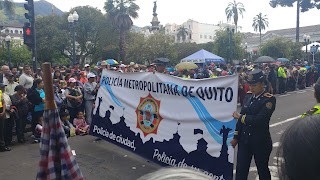
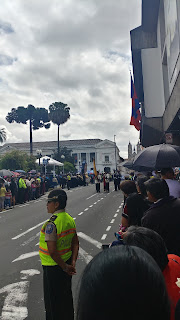
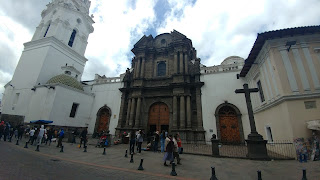
We took a trolley to Historic Quito, and once there were able to see a small parade of all the local police forces, watch youth protest (what I am not completely sure), and visit the many sites including a very famous plaza, a couple of beautiful churches, and the many street vendors selling everything from fruit and ice cream to drain strainers for your kitchen sink (crazy, right?!). After visiting Historic Quito, we ventured about 30 minutes out of Quito to have lunch with Ceci's family who was incredibly welcoming and sympathetic to my less than great Spanish.
Favorite memories:
- Taking my first (of many) tourist pictures with the statue commemorating Ecuadorian independence at the Plaza de Independencia and taking another with a quote from Ecuadorian author, Pablo Palacio (No, not Pablo Picasso, Mom)
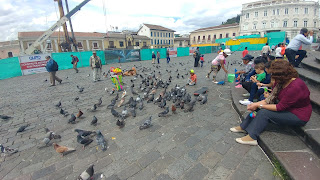
- Visting the Iglesia de San Francisco and watching children (and Ceci) play with the pigeons out front
- Buying my first mangos verdes con sal (Green Mangoes with Salt!) from a street vendor to try!


Saturday - 27/5/17
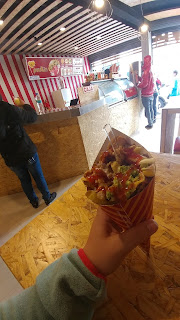
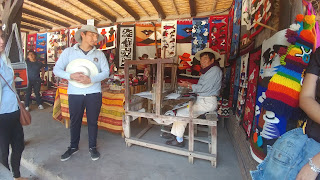
On Saturday, Madeline (a friend from Venezuela) and I, spent the day at in Otavalo at one of South America's largest and most spectacular indigenous markets, and this is one of those places which is hard to describe. The market encompasses the majority of the town square, and then some, and is filled with vendors selling almost everything. Need a spoon for your lunch that you bought? Got it. Need a bag or bucket to carry all your purchases in? Got it. We walked around for a good majority of the day, found lunch in town at a small restaurant called Poutin, had some gourmet french fries and headed toward's Otavalo's other market - their animal market. Now, Madeline and I both bonded over our former pet guinea pigs and our love of animals, so this was a fairly awful idea as this was a market to purchase animals to eat. We fortunately spent too much time at the other market, and the animal market was almost closed so we weren't exposed to too many things we didn't want to see. Enough said. Following our adventures through Otavalo, we took a bus to a smaller town called San Pablo and walked to the Lago de San Pablo. This lake was spectacular! Sitting right next to a volcano, the Lake of San Pablo was absolutely stunning. We only spent a couple of hours at the lake since we were dead tired, and eventually headed back to Otavalo to catch a bus back to Quito.
Favorite memories:
- Taking a 2 hour bus ride from Quito to Otavalo (and back) through Quito's hills and valleys (P.S. They play movies for you too!)
- Bargaining for the first time for a blanket and poncho at the Otavalo market
- Buying a coconut! They're sold in carts which walk up and down the street. When you buy one, they shave all the brown skin off, cut a hole in the top, and give you a straw. You get to drink the milk of the coconut AND eat the actual thing. So crazy!
- Taking a boat ride through the Lake of San Pedro and feeling the wind and water splash in your face
- Eating banana empanadas and sharing a scary looking fish with Madeline for lunch

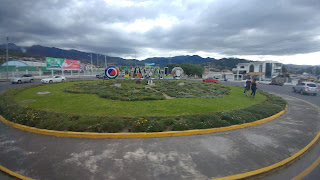


Sunday - 28/5/17
For our adventure today, Madeline and I ventured to the City at the Middle of the World (Ciudad mitad del mundo). This is a HUGE tourist attraction in Ecuador as it is the GPS location of the actual Equator. Here one is able to stand in both hemispheres at once, see crazy demonstrations about gravity at the equator, and, of course, take a lot of pictures. We first visited the Museum of Intinan (museo del intiñan) at the recommendation of Ceci, and here you will find the actual GPS located Equator, along with several lessons about the Amazon and the local people. It was super cool to do all the experiments and experience the equator in different ways like balancing an egg on the top of a nail, walking along a straight line between the two hemispheres, and a water demonstration where the water spins different ways on both sides of the Equator. After visiting this museum, we went to the actual monument which is less than a block away, and was enacted by the French explorers when they first began studying the equator in Ecuador. However, after some advancements in technology, it was discovered that this wasn't the actual equator, but it was too late as the monument had already been made (and it's huge!). At the actual monument, there are more tourist attractions such as a lot of stores, restaurants, llamas, different museums, and even cultural dances in the plaza. Both attractions ended up taking quite a bit of time, and we ended up leaving later in the afternoon, just as exhausted as we were at the end of the day before.
Favorite memories:
- Visiting the Museum of Intinan, having a small and interactive tour group, and getting to see all the Equator demonstrations!
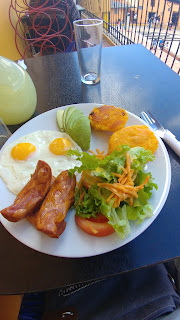
- Having lunch at the actual monument and getting to try llapingachos (a traditional Ecuadorian dish)!
- Missing our bus stop on the way home and taking the craziest taxi ever (Literally, he was crazy. Drove like an insane person and almost got in a fight with another driver)



Good morning from Ecuador!
I have officially been in Ecuador 1 whole week, and I have absolutely loved it! I have tried A LOT of new fruit and food, begun learning my way around Ceci's neighborhood, and learned a lot about what to and not to do when interacting with an Ecuadorian.
We had a three day weekend this past weekend, and were able to use our time well by exploring Historic Quito, the Indigenous market at Otavalo, the lake of San Pablo, and the City at the Middle of the World! Here's a little bit about our adventures - I hope you enjoy it! :)
Friday - 26/5/17
This past Friday was a holiday in Ecuador as it was the celebration of the Battle of Pichincha (which actually took place on May 24th, 1882). Pinchincha is a volcano near Quito, and is the site where the battle for Quito's independence was fought. Hence, the need to celebrate each year! Most offices and businesses were closed, so Ceci and I headed to Quito Colonial for some sightseeing. One thing that I learned very quickly during my first week in Quito is that you can take a bus or trolley anywhere, as long as you know where you're going. The buses cost around $0.25 and go all over the place, while the trolley's cost about the same and only go north and south (I think ...). However, they both carry a lot of people, probably way more than comfort, and can cause you to question how much space a person genuinely needs.


We took a trolley to Historic Quito, and once there were able to see a small parade of all the local police forces, watch youth protest (what I am not completely sure), and visit the many sites including a very famous plaza, a couple of beautiful churches, and the many street vendors selling everything from fruit and ice cream to drain strainers for your kitchen sink (crazy, right?!). After visiting Historic Quito, we ventured about 30 minutes out of Quito to have lunch with Ceci's family who was incredibly welcoming and sympathetic to my less than great Spanish.
Favorite memories:
- Taking my first (of many) tourist pictures with the statue commemorating Ecuadorian independence at the Plaza de Independencia and taking another with a quote from Ecuadorian author, Pablo Palacio (No, not Pablo Picasso, Mom)
- Visting the Iglesia de San Francisco and watching children (and Ceci) play with the pigeons out front
- Buying my first mangos verdes con sal (Green Mangoes with Salt!) from a street vendor to try!


Saturday - 27/5/17
On Saturday, Madeline (a friend from Venezuela) and I, spent the day at in Otavalo at one of South America's largest and most spectacular indigenous markets, and this is one of those places which is hard to describe. The market encompasses the majority of the town square, and then some, and is filled with vendors selling almost everything. Need a spoon for your lunch that you bought? Got it. Need a bag or bucket to carry all your purchases in? Got it. We walked around for a good majority of the day, found lunch in town at a small restaurant called Poutin, had some gourmet french fries and headed toward's Otavalo's other market - their animal market. Now, Madeline and I both bonded over our former pet guinea pigs and our love of animals, so this was a fairly awful idea as this was a market to purchase animals to eat. We fortunately spent too much time at the other market, and the animal market was almost closed so we weren't exposed to too many things we didn't want to see. Enough said. Following our adventures through Otavalo, we took a bus to a smaller town called San Pablo and walked to the Lago de San Pablo. This lake was spectacular! Sitting right next to a volcano, the Lake of San Pablo was absolutely stunning. We only spent a couple of hours at the lake since we were dead tired, and eventually headed back to Otavalo to catch a bus back to Quito.
Favorite memories:
- Taking a 2 hour bus ride from Quito to Otavalo (and back) through Quito's hills and valleys (P.S. They play movies for you too!)
- Bargaining for the first time for a blanket and poncho at the Otavalo market
- Buying a coconut! They're sold in carts which walk up and down the street. When you buy one, they shave all the brown skin off, cut a hole in the top, and give you a straw. You get to drink the milk of the coconut AND eat the actual thing. So crazy!
- Taking a boat ride through the Lake of San Pedro and feeling the wind and water splash in your face
- Eating banana empanadas and sharing a scary looking fish with Madeline for lunch


 |


Sunday - 28/5/17
For our adventure today, Madeline and I ventured to the City at the Middle of the World (Ciudad mitad del mundo). This is a HUGE tourist attraction in Ecuador as it is the GPS location of the actual Equator. Here one is able to stand in both hemispheres at once, see crazy demonstrations about gravity at the equator, and, of course, take a lot of pictures. We first visited the Museum of Intinan (museo del intiñan) at the recommendation of Ceci, and here you will find the actual GPS located Equator, along with several lessons about the Amazon and the local people. It was super cool to do all the experiments and experience the equator in different ways like balancing an egg on the top of a nail, walking along a straight line between the two hemispheres, and a water demonstration where the water spins different ways on both sides of the Equator. After visiting this museum, we went to the actual monument which is less than a block away, and was enacted by the French explorers when they first began studying the equator in Ecuador. However, after some advancements in technology, it was discovered that this wasn't the actual equator, but it was too late as the monument had already been made (and it's huge!). At the actual monument, there are more tourist attractions such as a lot of stores, restaurants, llamas, different museums, and even cultural dances in the plaza. Both attractions ended up taking quite a bit of time, and we ended up leaving later in the afternoon, just as exhausted as we were at the end of the day before.
Favorite memories:
- Visiting the Museum of Intinan, having a small and interactive tour group, and getting to see all the Equator demonstrations!
- Having lunch at the actual monument and getting to try llapingachos (a traditional Ecuadorian dish)!
- Missing our bus stop on the way home and taking the craziest taxi ever (Literally, he was crazy. Drove like an insane person and almost got in a fight with another driver)


Saturday, May 27, 2017
MDP, immersion in Ecuador 2017

The Agents of Transformation Program (PAT) of the
BCF implements innovative, groundbreaking projects for university students who lay the
foundation for Smart Destinations. Programs range
from three weeks to three months, and target marginalized communities in the
Amazon, the Sierra, the Costa (coast) and on the Galapagos Islands. These personalized
training programs introduce participants to community leaders and equip them in
the following areas:
- Stakeholder mapping and analysis
- Community strength-based assessment
- Train-the-trainer curriculum design (methodology to introduce best practices)
- Application of technology to promote and conserve local destinations.
Our agents of transformation program creates opportunities for young
people to:
- Develop the skills to develop and implement practical alternatives for development
- Explore the different aspects of development in an emerging market economy context
- Develop Spanish language proficiency through cultural immersion
- Work on Smart Destinations through innovative applications of technology
- Implement workshops to invest in developing and promoting Ecuador as a global destination for ecotourism
Live,
learn, give, experience, enjoy, and share with peers in Ecuador. FIND OUT MORE
Considering all above, we welcome SARAH WHITLOCK and CECILIA GUERRERO, MDP Program from Regis University, CO, USA.
Currently agendas:
Week Itinerary Immersion program

- Week 1. Adaptation and Orientation Component (culture, language, altitude and cultural organisation in Quito
- Local tours (excursions to Quito Colonial, Mitad de Mundo, Otavalo, El teleferico)
- Integration activities with local interns (cooking, climbing, biking, planning)
- Introduction and workshops with local academia.
Week 2. Community Project Planning Component (Quito)
- Curriculum Design for Smart Community Initiative education directed to local stakeholders (Public, Private, Civil, Media and Academic).
- Identification, negotiation and setting agreements with local communities

Tuesday, October 11, 2016
Impressions of our afternoon sessions with the local students 2016
 |
| Group picture after our field trip to the local tree nursery |


Picking up waste on our way to the tree nursery - an eye-opening experience for all of us (including Nic, the human garbage can, who had to carry the shocking amount of litter we found on our short way).

Listening to local government official Ramiro Alcoser explaining the purpose and functioning of the tree nursery and the local reforestation program. We learned a lot, our students showed great interest and participated by posing very good questions.

Jeff demonstrating the functioning and dangers of water contamination through a well prepared small scale simulation.


A normal day at class: Presenting about sustainable energy, water and waste management. Most of our theoretical input generated a lot of participation by our students and great discussions with them.


Bonding in our spare time: Hiking with Renato and José (l.); on our way to the "Virgen del Cisne" procession with Steeven (r.).
Monday, October 10, 2016
Our Master of Science in Sustainable Energy Development (SEDV) Interns in Mindo 2016
 |
| Margarita, Jeff and Nic presenting our program at the opening event |
Maria Margarita Meza

As our only
native Spanish speaker, Margarita soon became the “Mamá” of our group. She had
to carry a very big part of the load during our afternoon sessions with the local
students, and did an incredible job. Margarita was an important connection
between the SEDV group and the local stakeholders, which made our work possible
and fruitful.
Jeff Coombes

Jeff was
the brain of our group. His ideas were incredibly helpful in order to prepare
participatory and fun workshops with the kids. Without his input, it would have
been impossible to create such excitement among the local students. He also
played a major role in organizing the final report for the local stakeholders.
Nic Ritchie

Even though
he didn’t speak a lot of Spanish when he arrived, Nic immediately connected
with the local students, thus having an amazing effect on the positive climate
in our classroom. The kids fell in love with his fun loving and open minded
nature, which made them overcome the language gap easily. Nic’s value for our
group was immense. Not only did he do everything that had to be done without a
word of complaint, he also guaranteed the harmony within the group.
Subscribe to:
Posts (Atom)